
Glycol and geothermal probes: what is the real risk to the environment?
The fluid circulating in geothermal probes is often a mix of water and glycol. For some people, the word immediately suggests a pollution risk if there is a leak. What is the reality?
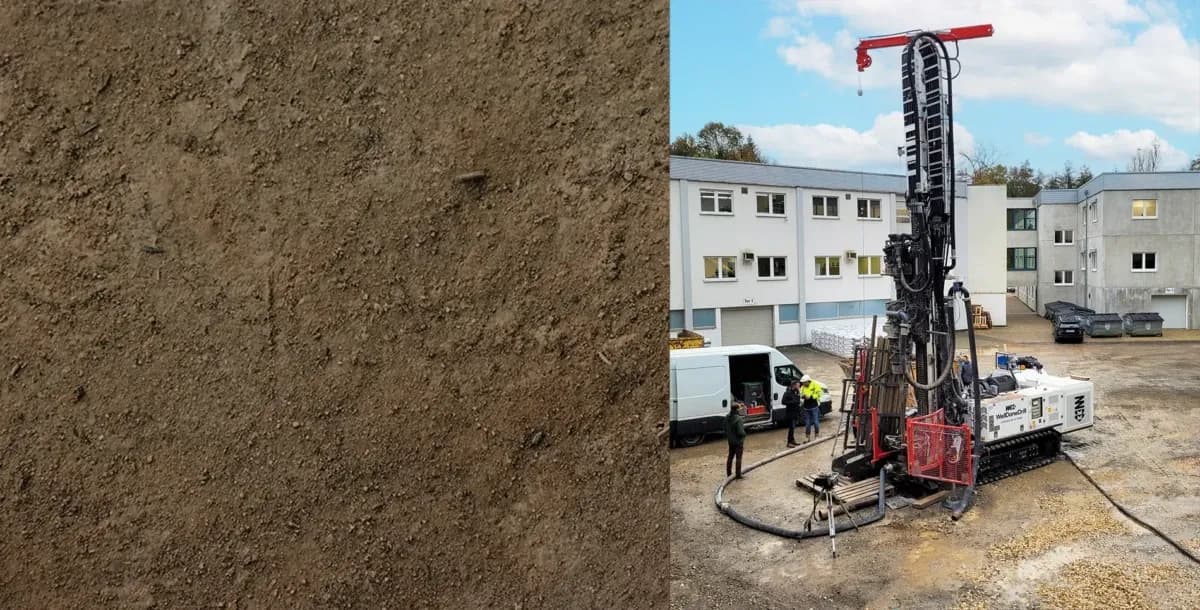
The fluid circulating in geothermal probes is often a mixture of water and glycol. For some people, the word immediately suggests a risk of pollution if there is a leak. What is the reality?
What is glycol used for in a geothermal installation?
Glycol is an antifreeze. Mixed with water in a given proportion, it:
- lowers the freezing point of the fluid circulating in the probes;
- prevents ice forming in the probe and equipment when temperatures drop below 0 °C;
- ensures safe, continuous operation of the installation, even during cold spells.
In a geothermal installation, the fluid always stays in a closed circuit: it circulates between the probes and the plant room, with no direct contact with the ground or groundwater.
What type of glycol is used?
Modern installations use glycol suited to thermal applications, generally technical-grade glycol specifically formulated for heating and cooling circuits. The products selected are:
- designed to limit their environmental impact;
- stable over time;
- compatible with the materials of the probes and equipment.
WellDoneDrill works with recognised products, chosen according to heat pump manufacturers' specifications and regulatory requirements.
Where does the glycol circulate: in the ground or in a closed circuit?
It is important to remember that glycol does not circulate "in the ground". It circulates in the probes, which are made of HDPE pipes embedded in geothermal grout.
The circuit works like this:
- the fluid leaves the manifold in the plant room;
- it travels down the geothermal probe;
- it comes back up through the second leg of the probe;
- it returns to the manifold, then to the heat pump.
In normal operation, there is therefore no direct contact between the glycol and the ground or groundwater.
What happens if there is a leak?
As with any hydraulic circuit, the risk of a leak can never be considered zero. However, several factors greatly limit the potential impact:
- the HDPE probes are made in one piece, with no buried joints;
- manifolds and connections are grouped in accessible areas (chambers, plant rooms);
- pressure tests are carried out systematically before commissioning and after the works;
- any drop in circuit pressure can be detected during operation.
If a leak does occur, it is usually in an accessible area (plant room, chamber), so it can be repaired quickly and the circuit topped up.
How WellDoneDrill limits this risk in practice
WellDoneDrill applies several precautionary principles:
- use of one-piece HDPE probes guaranteed for 50 years;
- welds and joints made only in accessible areas;
- systematic pressure tests of probes and manifolds before trenches are backfilled;
- documentation of the circuits to make later interventions easier.
These good practices considerably reduce the likelihood of a leak and make early detection easier.
Conclusion: should you worry about glycol in geothermal systems?
In a properly designed and built geothermal installation, glycol circulates in a closed circuit, much like a conventional heating circuit. It is not a fluid injected into the ground or the aquifer, but a heat-transfer fluid contained in the probes.
The risk of accidental pollution is very low and is controlled through the quality of the materials, pressure testing and circuit design. For a project owner, the main thing is to make sure the installation is carried out by professionals who follow these good practices, which is at the heart of WellDoneDrill's approach.