
Geothermal drilling 2.0: 10 years of innovation that change everything on site
In ten years, geothermal drilling has taken a technological leap: better tools, real-time sensors, smart control. The result: deeper, more accurate and cheaper boreholes, even in complex settings.
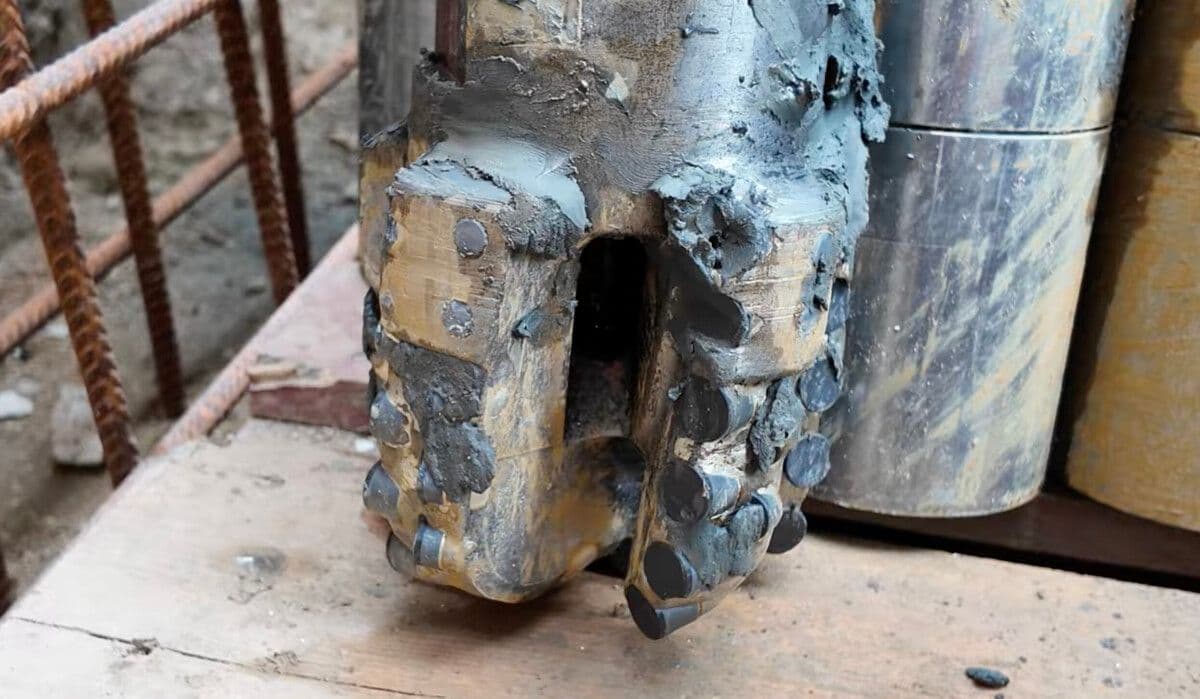
In ten years, geothermal drilling has taken a technological leap: better tools, real-time sensors, smart control… The result: deeper, more accurate and cheaper boreholes, even in complex settings.
1. More powerful down-the-hole hammers, built for hard rock
New down-the-hole (DTH) hammers transmit impact energy directly to the bit, which greatly speeds up penetration in rocky ground.
Recent projects show that this new generation of hammers can increase drilling speed by a factor of 2 to 10 compared with conventional solutions, mechanically reducing the cost per metre.
2. Optimised drill bits and tools: precision and durability
Drill bits now feature optimised cutting geometries and more abrasion-resistant materials, which reduces stoppages to change tools.
Combined with sturdier hammers and better cuttings management, these advances make it possible to reach greater depths in shorter time, without sacrificing verticality or borehole quality.
3. On-board sensors and real-time monitoring: drilling gets smart
Rugged sensors, sometimes 3D-printed, continuously measure bit–rock interaction, impact energy and fluid circulation, giving crews real-time feedback.
Coupled with decision-support algorithms or AI, these systems can anticipate incidents (loss of circulation, abnormal wear, jamming) and instantly adjust drilling parameters to maintain performance and reduce risk.
4. Automation and drilling robots: deeper, with fewer people
New machine concepts that work directly inside the borehole, similar to small vertical tunnel boring machines, are emerging to reduce the site footprint and automate part of the work.
These highly automated systems with advanced sensors can run with small crews (sometimes just two operators) while keeping tight control of the trajectory, cuttings removal and safety.
5. Real impact: lower costs, more geothermal potential
Faster drilling, fewer stoppages and better real-time knowledge of the subsurface translate into a significant drop in cost per metre for geothermal projects.
At the same time, the ability to drill deeper, more precisely and on smaller footprints opens up new projects: geothermal in dense urban areas, deeper boreholes for higher outputs, and more "next-generation" projects that were once considered too risky or too expensive.
6. What this means for a WellDoneDrill client
For the end client, these innovations mean faster, better-controlled sites with more predictable costs, and a borehole sized precisely for the output actually needed.
They also make geothermal solutions possible where they seemed out of reach only a few years ago (tight plots, urban settings, mixed ground), backed by state-of-the-art drilling expertise.